AHB Center for Behavioral Health and Wellness

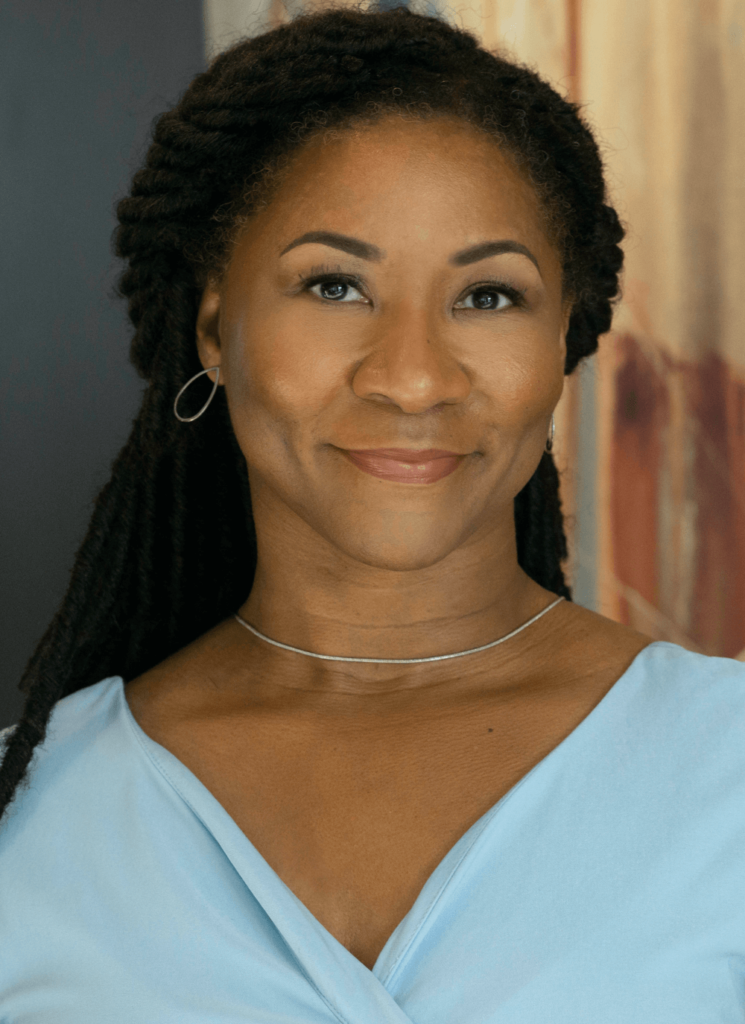
April Harris Britt
Email ahb@ahbpsych.com
April Harris-Britt, Ph.D. is a licensed psychologist in private practice in Durham since 2003. She received her doctorate from University of North Carolina at Chapel Hill. In addition to providing child, adolescent, adult, and family therapy, Dr. Harris-Britt conducts comprehensive psychological evaluations, forensic evaluations, comprehensive child custody evaluations, civil guardian ad litem evaluations, and parental competency evaluations. Specific areas of expertise include trauma and violence, adoption and attachment, medically fragile children, divorce transitions, ADHD and learning disabilities, autism spectrum disorders, and multicultural issues.
Dr. Harris-Britt utilizes a systems approach to wellness that incorporates developmental, psychological, and social strengths in assessment and treatment. She is trained in many evidence-based models, including Trauma-focused CBT, Motivational Interviewing, and EMDR. Dr. Harris-Britt is often contacted by families, attorneys, and the courts to provide intensive intervention services for families engaged in high-conflict custody disputes, including coparenting and reunification therapy. She provides services as a Parent Coordinator.
Dr. Harris-Britt is licensed in the states of NC and VA. She maintains a faculty appointment at the University of North Carolina at Chapel Hill and Fielding Graduate University, where she is actively engaged in teaching and research. Some of her work has been featured on CNN, in Newsweek, on local television and radio news programs, and in the New York Times Bestseller, NurtureShock. She is currently a member of the Board for the Center for Cooperative Parenting and the Board for the Advancement of Psychology in the Public Interests (BAPPI) for the American Psychological Association (APA).
+ Select Publications, Presentations, Manuscripts and Honors
Research Publications
Goldman-Fraser, J., Harris-Britt, A., Leone E, Kurtz-Costes, B. E., Martin, S. L. (2010). Emotional Availability and Maternal Substance Dependence. Infant Mental Health Journal, 31, 1-5.
Street, J., Harris-Britt, A., & Walker-Barnes, C. (2009). Examining Relationships between Ethnic Identity, Family Environment, and Psychological Outcomes for African American Adolescents. Journal of Child and Family Studies, 18, 412-420.
Kurtz-Costes, B., Rowley, S. J., Harris-Britt, A., & Woods, T. A. (2008). Math/Science Gender Stereotypes and Students’ Perceptions of Ability: Are girls resilient?, Merrill Palmer Quarterly, 54, 386-409.
Harris-Britt, A., Valrie, C. Kurtz-Costes, B., & Rowley, S. J. (2007). Perceived Racial Discrimination and Self-Esteem in African American Youth: Racial Socialization as a Protective Factor. Journal of Research on Adolescence, 17, 669-682.
Martin, S. L., Casuneuva, C., Li, Y., Harris-Britt, A., & Kupper, L. L. (2006). Intimate partner violence and depression before and during pregnancy. Journal of Violence Against Women, 12, 1-19.
Martin, S. L., Harris-Britt, A., Li, Y., Moracco, K. E., Kupper, L. L., & Campbell, J.C. (2004). Changes in Intimate partner violence during pregnancy. Journal of Family Violence, 19, 201-210.
Harris-Britt, A., Martin, S. L., Li, Y., Casuneuva, C., & Kupper, L. L. (2004). Posttraumatic stress disorder and associated functional impairment during pregnancy: Some consequences of violence against women. Journal of Clinical Psychology in Medical Settings, 11, 253-264.
Harris-Britt, A. & Kupersmidt, J. B. (Dissertation). The role of negative affect as a mediator the relationship between exposure to peer stressors and behavioral functioning at school. University of North Carolina at Chapel Hill.
Woods, T. A., Kurtz-Costes, B., & Harris-Britt, A. (Unpublished manuscript). Racial Socialization in African American Families: A Qualitative Investigation with Parents of Adolescents.
Professional Presentations
Zervopoulos, J., Harris-Britt, A., Cade, B., & Condie, L. (August 2011) Practice Guidelines in the Real World: Aspirations, Guidelines, and Professional Judgment. Paper Symposium at the Annual APA Convention; Washington, DC.
Harris-Britt, A. (August 2010)Substance Use and Co-Occurring Risk Behaviors Among Black Adolescents. Discussant at Paper Symposium at the Annual APA Convention; San Diego, CA.
Harris-Britt, A., & Okeke, N. (August 2009). Managing the Effects of Discrimination through Racial Socialization: Implications for Clinical Practice. Invited Presentation by Division 12, Section VI at Annual APA Convention; Toronto, Canada.
Harris-Britt, A., & Hardaway, C. (2009). Pathways to Chronic Marijuana Use for African American Adolescent Males. Paper presented at the Annual APA Convention; Toronto, Canada.
Harris-Britt, A., & Okeke, N. (September 2007). Battling the Effects of Discrimination with Parental Socialization: Implication for Clinical Practice. Paper presented at the Annual Diversity Challenge Hosted by The Institute for the Study and Promotion of Race and Culture; Boston, MA.
Goldman-Fraser, J., Harris-Britt, A., Kurtz-Costes, B. E., & Martin, S. L. (March 2007). The Emotional Availability of Substance-Dependent Mothers in Treatment: Psychosocial Correlates and Implications for Intervention. Poster presented at the Biennial Meeting of the Society for Research in Child Development; Boston, MA.
Harris-Britt, A., Okeke, N. A.., Kurtz-Costes, B. E., & Rowley, S. J. (March 2007). Mediational Influences in the Relationship between Racial Socialization and Achievement Outcomes in Late Childhood. Poster presented at the Biennial Meeting of the Society for Research in Child Development; Boston, MA.
Kurtz-Costes, B. E., Rowley, S. J., Copping, K., Wood, D., Okeke, N. A., & Harris-Britt, A. (March 2007).Middle School Adjustment in African American Youth: Gender and School Contextual Effects. Paper presented at the Biennial Meeting of the Society for Research in Child Development; Boston, MA.
Harris-Britt, A., Valrie, C., Kurtz-Costes, B., Rowley, (March 2006). Too Much Versus Not Enough?: Race Socialization Messages as a Buffer Against the Effects of Perceived Discrimination. Paper presented at Biennial Meeting of the Society for Research in Adolescence; San Francisco, CA.
Kurtz-Costes, B., Rowley, S. J., Woods, T. A., & Harris-Britt, A. (April 2005). Math/Science Gender Stereotypes Across the Transition to Middle School: The development of stereotype resilience. Poster presented at Biennial Meeting of the Society for Research in Child Development; Atlanta, GA.
Harris-Britt, A. (2004, August). Coping with peer-related stressors in middle school. Poster presented at American Psychological Association; Honolulu, Hawaii.
Martin, S. L., Kupper, L. L., Moracco, K. E., Dickens, P. A., Harris-Britt, A., & Chang, Y. (2004, August). Assault of women with disabilities. Poster presented at American Psychological Association; Honolulu, Hawaii.
Harris-Britt, A., Martin, S. L., Li, Y., Casuneuva, C., & Kupper, L. L. (2003, November). Posttraumatic stress disorder and associated functional impairment during pregnancy: Some consequences of violence against women. Poster presented at American Public Health Association; San Francisco, CA.
Harris-Britt, A. (2003, April). Examining the relationships between exposure to subtypes of peer stressors and social-emotional functioning at school. Poster presented at the Biennial Meeting of the Society for Research in Child Development; Tampa, FL.
Harris-Britt, A. (2003, April). Negative affect as a mediator in the relationship between peer stressors and school functioning. Poster presented at the Biennial Meeting of the Society for Research in Child Development; Tampa, FL.
Harris-Britt, A., Kupersmidt, J. B., & Clarke, A., T. (2001, June). Mothers’ socialization of adolescents’ coping with interpersonal stressors. Poster presented at the Biennial Conference of the Society for Community Research and Action; Atlanta, GA.
Harris-Britt, A., Martin, S., Yun, L., Moracco, K., Campbell, J., & Kupper, L. (2001, June). Rates of partner violence before and during pregnancy. Poster presented at the Biennial Conference of the Society for Community Research and Action; Atlanta, GA.
Kupersmidt, J. B., Harris-Britt, A., Putallaz, M., & Grimes, C. (2001, June). Maternal socialization of coping with peer stressors and girls’ popularity. Poster presented at the Biennial Conference of the Society for Community Research and Action; Atlanta, GA.
Harris-Britt, A. & Clarke, A. T. (2001, April). The parent as a social coach: Relations among parents’ coping advice and adolescents’ social competence. Poster presented at the Biennial Meeting of the Society for Research in Child Development; Minneapolis, MN.
Harris-Britt, A. (2001, February). Measures and scales: Where to find them and how to develop them. An invited lecture given in the School of Public Health in the Department of Maternal and Child Health. University of North Carolina at Chapel Hill, NC.
Clarke, A. T., Harris-Britt, A., Hooker, P., Ragland, L., Ready, J., & Warren, J. (2000, February). Ecological approaches to clinical work with African-Americans. A 2-part seminar presented at the University of North Carolina at Chapel Hill, as part of a Colloquium Series on Diversity Issues in Clinical Psychology.
Examples of Community Presentations and In-Service Workshops
Harris-Britt, A. (2003 – 2009, November). Consideration of Racial Identity Development in Relation to Clinical Work with African American Clients. An annual invited training seminar for the Graduate Counseling Program in the School of Education at UNC-Chapel Hill; Chapel Hill, NC.
Harris-Britt, A. (2004 – present, October). Ecological Approaches to Clinical Work with African American Clients. An annual invited training seminar presented as part of the training curriculum for Predoctoral Psychology Interns in the Department of Psychiatry in the UNC-School of Medicine; Chapel Hill, NC.
Harris-Britt, A. (2002 – present). Bullying in the schools? What can families do? A rotation of school-based seminars presented to students, parents, and school personnel a series of public and private schools in Durham, Chatham, and Orange counties.
Harris-Britt, A. (2005, April). Child Development Basics: Creating a Nurturing Environment for Your New-Born. A community-based educational series for Adolescent Parenting Program of Orange County.
Harris-Britt, A. (2001 – 2005). Children’s development 3-5: What can you expect? An annual community-based seminar for the Chapel Hill-Carrboro Pre-K/Head Start program as a part of the Parent University parenting education program. Chapel Hill, NC.
Harris-Britt, A. (2002, June). Bullying: Issues of incidence, identification, prevention, and intervention. A community-based presentation at the Healthy Living Institute, sponsored by the North Carolina Department of Public Instruction. Hickory, NC.
Harris-Britt, A. (2001, March). Understanding bullying and other negative peer experiences as a source of student stress. A professional presentation for the Annual School Health Association of North Carolina. Pinehurst, NC.
PROFESSIONAL ORGANIZATIONAL ACTIVITIES | ||
| 2010 – present | APA Committee on Professional Practice & Standards (COPPS) | |
| 2010 – present | NC Psychological Association; Public Sector Committee | |
| 2010 – present | Membership Chair, APA Division 12, Section VI | |
| 2009 – 2010 | Secretary, APA Division 12, Section VI | |
| 2008 – 2010 | Awards Committee Chair, APA Division 12, Section VI | |
| 2003 – present | NC Psychological Association; Scientific, Academic & Student Affairs Committee | |
| 2002 – 2004 | Secretary, Triangle Chapter of Association of Black Psychologists | |
| 2000 – 2002 | Secretary, Carolina Seminar on Aggression & Violence among Children & Adolescents | |
COMMUNITY ORGANIZATIONAL ACTIVITIES | ||
| 2010 – present | Board Member/Trustee – Carolina Friends Schools (Durham, NC) | |
| 2008 – present | Professional Advisory Committee for The Hill Learning Center (Durham, NC) | |
| 2005 | Member, Review Committee for Ken Bollen, Director of Odum Institute | |
| 2004 – 2005 | Board Member and Co-Chair for Communiversity Afterschool/Mentorship program at Sonya Haynes-Stone Black Cultural Center | |
| 2003 – 2005 | Board Member, Community Alliance for School Success (CASS) for Chapel Hill-Carrboro School System Community | |
| 2003 – 2004 | Board Member, Chapel Hill Daycare Center | |
PROFESSIONAL MEMBERSHIPS | ||
| 1998 – present | Member, North Carolina Psychological Association | |
| 1998 – present | Member, American Psychological Association | |
| 2009 – present | Member, Association of Play Therapy | |
| 2000 – present | Member, Association of Black Psychologists | |
| 1998 – 2010 | Member, Society for Research in Adolescence | |
| 2003 – 2009 | Member, Black Caucus of Society of Research in Child Development | |
| 2003 – 2004 | Member, American Public Health Association | |
| 2000 – 2002 | Member, Society for Research in Community Action | |
| 1998 – 2009 | Member, Society for Research in Child Development | |
REFEREE ACTIVITIES | ||
| 2010 – present | Applied Developmental Science | |
| 2010 | American Psychological Association Convention | |
| 2009 | Society for Research on Adolescence | |
| 2007 – present | Journal of Family Violence | |
| 2007 – present | Journal of Violence Against Women | |
| 2007 | Ad-hoc Reviewer, National Science Foundation, SBE/BCS | |
SELECT HONORS AND AWARDS | ||
| 2005 – 2007 | National Institutes of Health (NIH) Health Disparities Scholar (LRP) | |
| 2006 | Departmental Letter of Recognition for Teaching Excellence | |
| 2005 | SRCD Junior Mentor for Millennium Fellows Mentorship Program | |
| 2004 | Ford Foundation Postdoctoral Fellowship Honorable Mention | |
| 2003 | Martin S. Wallach Award for Most Outstanding Clinical Psychology Intern | |
| 2001 | SRCD Junior Mentor for Millennium Fellows Mentorship Program | |
| 2001 – 2002 | NICHD Predoctoral Fellowship (Center for Developmental Science) | |
| 2001 | Ford Foundation Dissertation Fellowship Honorable Mention | |
| 2001 | Latane Summer Interdisciplinary Research Grant | |
| 2001 | SRCD Junior Mentor for Millennium Fellows Mentorship Program | |
| 2001 | Sigma Xi Research Grant | |
| 2000 | Research Award for Summer Institute for Longitudinal Methods | |

Robin H. Exum-Calhoun, Ph.D.
Email rexc@ahbpsych.com
Robin H. Exum-Calhoun, Ph.D. received her BA degree from Dartmouth College and she earned both her Master’s and Doctoral degrees from New York University. She has always had an interest in working with families. Her clinical training included work with children, adolescents, adults and family therapy along with psychological assessment.
Dr. Exum-Calhoun’s mission is to improve the lives of the families with whom she works. Truly embracing the notion that “It Takes a Village to Raise a Child” she seeks to work with all members of the “Village” who might be involved in supporting members of a family. She utilizes a variety of techniques to improve individual functioning and strengthen family relations. Treatment modalities such as cognitive behavior therapy, psychodynamic therapy, solution focused therapy and EMDR are used to help clients cope with a variety of clinical syndromes including mood disorders, anxiety, trauma, disorders often experienced by children, and family problems. She also works with couples seeking to strengthen their relationships recognizing that the couple is the foundation of the family unit. Dr. Exum-Calhoun’s clinical interests include: child and adolescent development, parenting, the transition from adolescence to young adulthood, women’s issues and the intersection of spiritually and clinical practice. Dr. Exum-Calhoun is a Christian and also incorporates spirituality into her psychological practice for individuals interested in treatment of this nature.
Dr. Exum-Calhoun uses her experience working in the School Psychology field to advise and advocate for parents seeking to improve their children’s educational experience. She provides psychoeducational assessment to help parents gain a better understanding of their child’s educational and emotional needs.
Dr. Exum-Calhoun’s professional work has also included teaching psychology at the undergraduate, Master’s and Doctoral levels at several universities including New York University, The College of Saint Elizabeth, and Saint Augustine’s College. She is currently a faculty member in the School of Undergraduate Studies at Capella University.

Akua Jackson, PhD
Email ajackson@ahbpsych.com
Dr. Akua Jackson is a licensed psychologist with specialized training in clinical and forensic psychology. She earned her Bachelor of Arts in Psychology from the University of North Carolina at Chapel Hill and her doctorate in Clinical Psychology from Fielding Graduate University, where her training emphasized forensic psychology and parent-child relationships.
Dr. Jackson provides therapy to children, adolescents, adults, and families. She has experience working with individuals presenting with anxiety, depression, PTSD, and culturally related stressors, as well as a wide range of complex, co-occurring clinical presentations. She also conducts comprehensive psychological and forensic evaluations to support diagnostic clarity and address a range of clinical and legal needs.
Her approach is grounded in evidence-based practice and tailored to meet each client’s unique needs. Dr. Jackson is committed to creating a supportive and culturally informed environment that promotes growth, insight, and lasting change.

Geoffrey Zeger, ACSW, LCSW
Email gzeger@ahbpsych.com
Geoff provides individual, couples and family therapy to children, adolescents, adults and couples. With over 40 years of total social work experience, Geoff employs multiple strategies and interventions to assist clients to reduce disruptive thoughts, emotions, and behaviors, and move towards productive life goals.
Geoff specializes in work with children (tantrums, anxiety, hyperactivity), adolescents (oppositional, self-harm, seeking independence from parents but making choices causing dependence), adults (depression, anxiety, worry, stress management, and addictive behavior including substances and the internet) and couples (communication difficulties, affairs, step-parenting/blended families). Geoff also does Family Therapy with children and parents together.
Along with several years of private and contractual work, Geoff has worked with Willie M. Children, JSO’s (Juvenile Sex Offenders), provided trainings to other clinicians concerning child issues, was Clinical Director of a Mental Health Crisis Team in Durham, worked with a Disaster Mental Health Team at Ground Zero, deployed to assist the reintegration of a Company of soldiers returning from Iraq, and completed Pre-Sentencing Evaluations for individuals with complex mental health and legal issues.

Keshawna Solomon, MA, LPA
Phone 919-401-8090 ext. 1007
Keshawna Solomon, MA, LPA is a Licensed Psychological Associate. She graduated from the University of North Carolina at Chapel Hill with a Bachelor’s degree in Psychology and African American studies. She completed her Master’s in Psychology with a Clinical Concentration, from North Carolina Central University. She has 7 years of experience working with adults who have Autism through Division TEACCH at UNC-Chapel Hill. Ms. Solomon conducts psychological evaluations, psycho-educational testing, developmental assessments, and consultations with schools. She also provides therapy to young children and adolescents, largely utilizing play therapy techniques. Her areas of clinical interest include trauma, anger management, and family systems. Her research interests include racial socialization, parental involvement, achievement motivation, and how these issues are related to academic outcomes in minority children. She is an active member of the American Psychological Association and the North Carolina Psychological Association.